
1
Web & Mobile App Development
We develop robust, secure and scalable web and mobile applications tailored to your business needs and your growth.
Our team of expert engineers designs innovative software solutions designed to stimulate the growth and success of your business.
Great partnerships, and clients who keep coming back.







Complete and innovative solutions to accompany your digital transformation
Technological services designed to accelerate your growth, optimize your processes and strengthen your digital presence. We build reliable solutions that create sustainable value.
We develop robust, secure and scalable web and mobile applications tailored to your business needs and your growth.
We implement reliable cloud infrastructures and DevOps practices to ensure performance, security, scalability and fast deployments.
We offer technical solutions in civil engineering, combining expertise, innovation and compliance with standards for sustainable and controlled projects.
We automate your business processes to reduce repetitive tasks, improve productivity and optimize your operational performance.
We design modern, intuitive and user-centered interfaces to provide a fluid, engaging and conversion-oriented experience.
Portfolio
Real projects, real businesses like yours
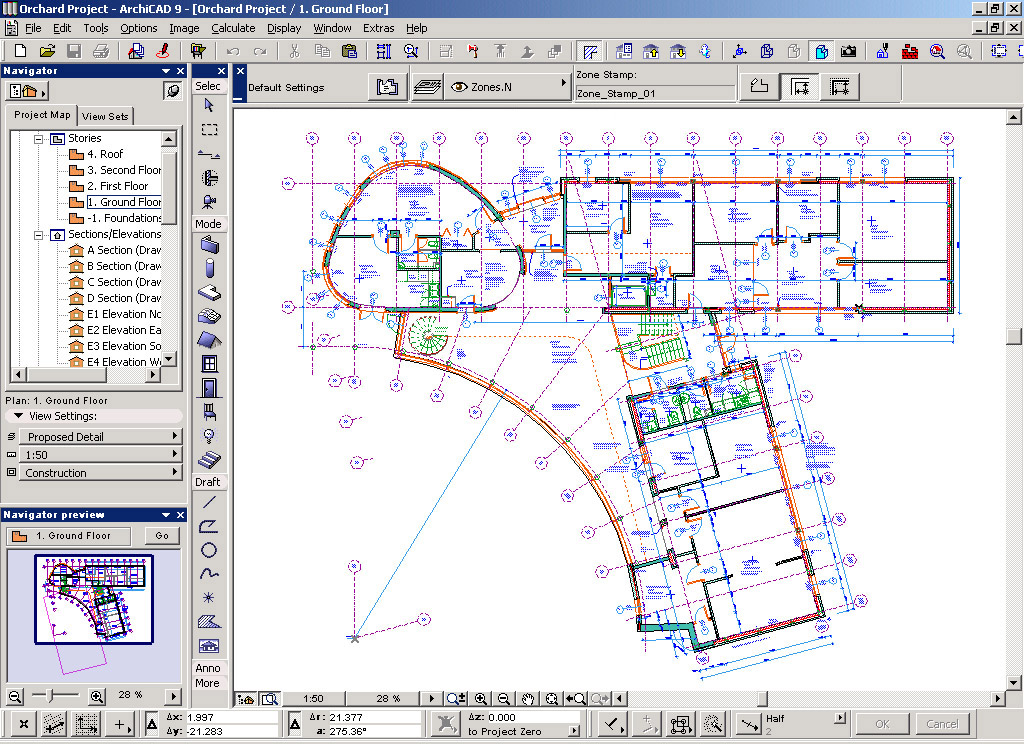
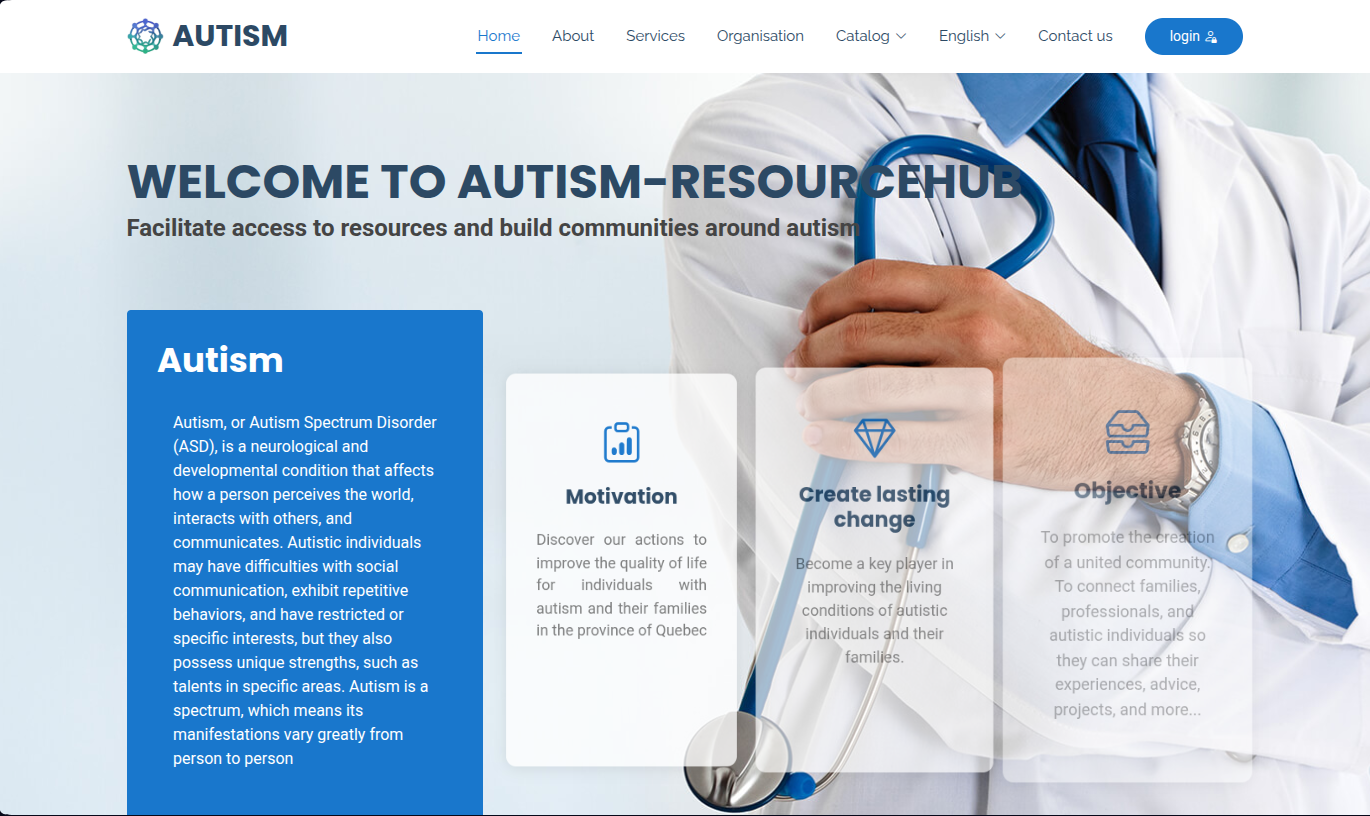
Autisme est dédié à la création de communautés de soutien pour les personnes directement ou indirectement affectées par l'autisme à travers les différentes pro…
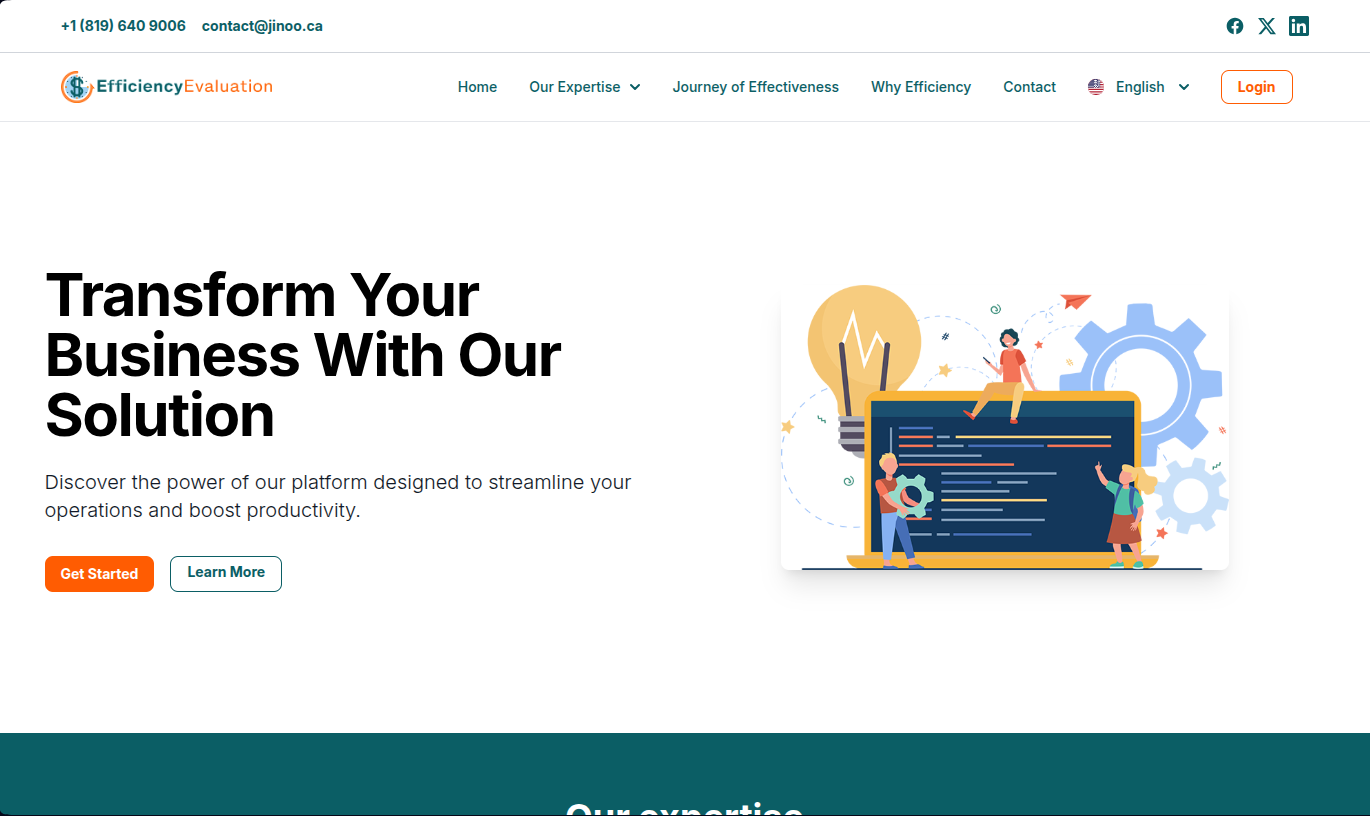
The Efficals platform gives your organization full, independent control to assess and manage technical efficiency across all units, at your own pace and with y…
Answers to frequently asked questions about our services.
We combine technical expertise, business understanding and continuous support to deliver reliable, scalable solutions tailored to your goals.
Discover our servicesWe apply security best practices, access controls, reliable configurations and constant attention to data protection.
Learn more about our securityWe help plan, migrate, automate and maintain cloud environments with DevOps practices adapted to your pace.
Explore our Cloud solutionsYes, we design high-performance and secure mobile applications with a seamless experience on modern devices.
View our mobile servicesWe accompany companies in finance, e-commerce, services, training, cloud infrastructure and digital transformation projects.
View our projects by sectorYou can start by contacting us. We analyze your needs, clarify your priorities and propose a simple roadmap to move forward.
Contact usDiscover articles, insights, and expert tips to stay up to date with technology trends and strengthen your digital skills.
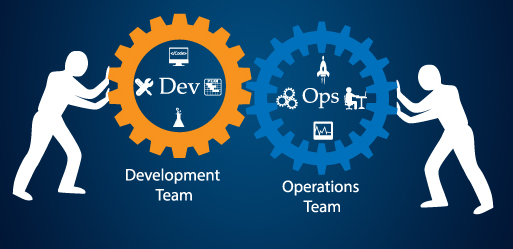
Je pensais que le DevOps consistait simplement à déployer des applications. Une discussion avec un ami de classe m’a fait voir les choses autrement. Au départ, je voyais le DevOps comme un métier dont le rôle était de déployer des applications en production, d’assurer leur sécurité, leur disponibilité, leur maintenabilité et leur évolution, tout en surveillant leurs performances grâce au monitoring. Tout cela fait effectivement partie du travail d’un ingénieur DevOps. Mais au cours d’une discussion avec un ami de classe, j’ai mieux compris une autre dimension du DevOps : ce n’est pas seulement un métier, c’est aussi une philosophie de travail. Le DevOps rapproche deux domaines : le développement logiciel (Dev) et les opérations informatiques (Ops). L’objectif est de favoriser la collaboration, d’automatiser les tâches répétitives, d’accélérer les livraisons et de rendre les mises en production plus fiables. Concrètement, cela signifie que : Le développeur doit aussi réfléchir à la façon dont son application fonctionnera en production. Les équipes cherchent à automatiser les tests et les déploiements grâce à la CI/CD. Le monitoring aide à détecter les problèmes et à comprendre le comportement des applications. Les incidents deviennent des occasions d’apprendre et d’améliorer les systèmes. Des outils comme Linux, Docker, GitHub Actions, Ansible, Terraform, Prometheus et Grafana permettent de mettre ces pratiques en œuvre. Mais ce que je retiens surtout, c’est qu’apprendre le DevOps ne consiste pas simplement à apprendre une liste d’outils. Il faut comprendre les problèmes qu’ils résolvent et savoir quand et pourquoi les utiliser. Cette discussion m’a donné envie d’approfondir le sujet et de consacrer une partie de mon apprentissage en 2026-2027 à la pratique du DevOps, à travers des projets concrets et des déploiements automatisés. Parfois, une simple discussion suffit pour remettre en question ce que l’on croyait savoir et nous donner envie d’aller plus loin. Et vous, quelle découverte a changé votre façon de comprendre un domaine de l’informatique ? #DevOps #SoftwareEngineering #Docker #CICD #Linux
DevOps
TCHONGWANG FONDJEU
Published on • 14 October 2026

Pourquoi les développeurs utilisent-ils Linux ? Quand on commence à apprendre la programmation, on utilise souvent Windows. Mais avec le temps, on remarque que beaucoup de développeurs préfèrent Linux. Pourquoi ? 1. Un environnement adapté au développement Linux propose de nombreux outils pour programmer, compiler du code, gérer des dépendances et automatiser des tâches depuis le terminal. 2. Un meilleur contrôle du système Les développeurs peuvent gérer les processus, les permissions, les services et les ressources de leur machine avec précision. 3. Une utilisation pratique des outils backend Des technologies comme Docker, Git, Python, Django, PostgreSQL et Nginx fonctionnent très bien sous Linux. Cela facilite la création d’environnements de développement proches de ceux utilisés en production. 4. Linux est très présent sur les serveurs De nombreux serveurs web et environnements cloud utilisent Linux. Apprendre à travailler dessus aide donc à mieux comprendre le déploiement et l’administration des applications. 5. La liberté et la personnalisation Linux est open source. On peut étudier son fonctionnement, choisir ses outils et adapter son environnement à ses besoins. Faut-il obligatoirement utiliser Linux pour devenir développeur ? Non. Windows et macOS sont aussi de bons choix. L’essentiel est de maîtriser ses outils et de comprendre comment fonctionne le système sur lequel on travaille. Comprendre Linux, c’est aussi apprendre à mieux maîtriser son environnement de développement. Et toi, tu développes sur Linux, Windows ou macOS ? Pourquoi ? #Linux #Python #Django #BackendDevelopment #DevOps #Programmation
Technology
TCHONGWANG FONDJEU
Published on • 12 October 2026
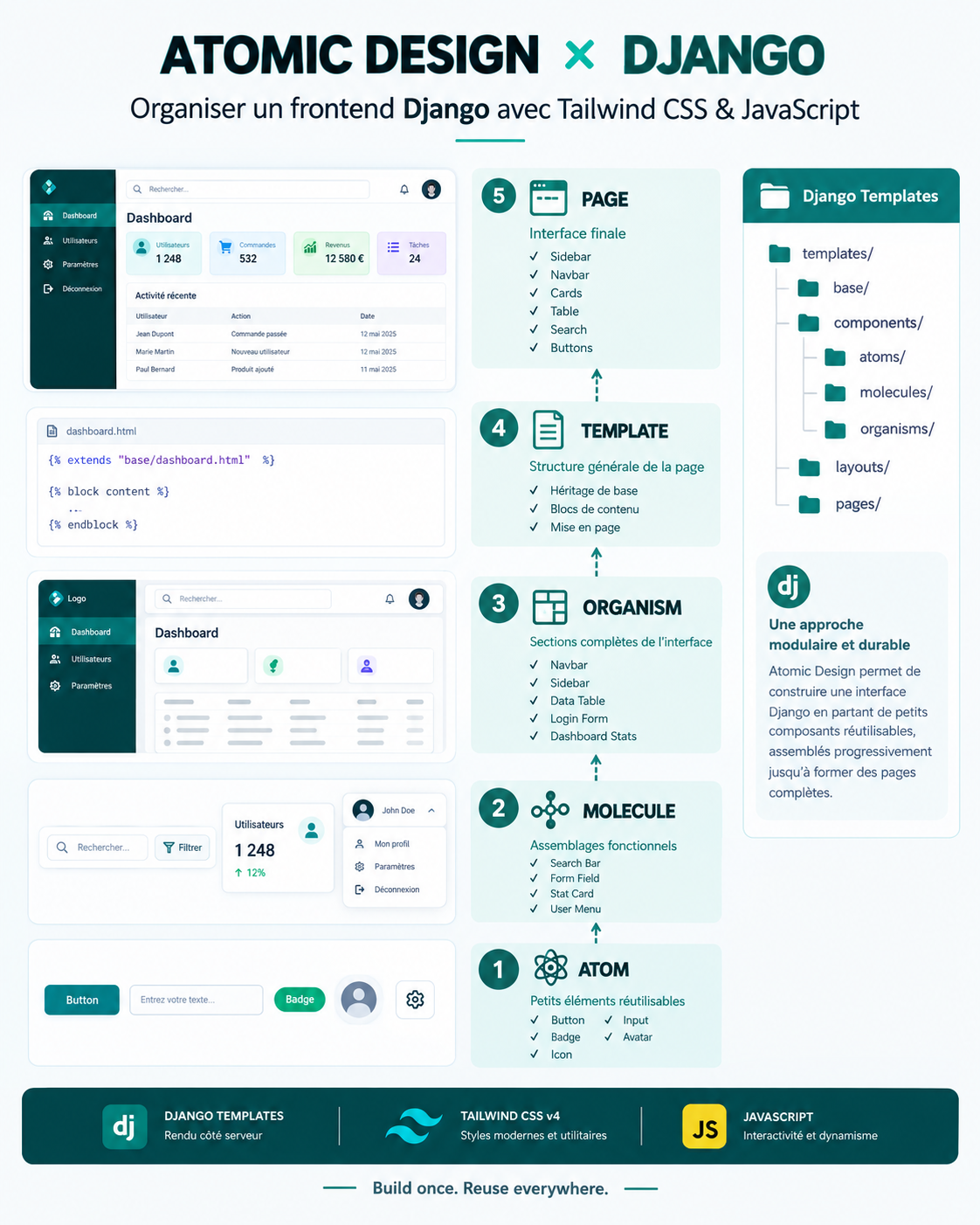
comprendre l’Atomic Design avec Django L’Atomic Design est une méthode pour organiser une interface utilisateur en plusieurs niveaux, du plus petit élément au plus grand. Avec Django, cette approche est particulièrement intéressante parce que Django utilise des templates HTML réutilisables grâce à l’héritage et à l’inclusion de templates. L’idée générale est : Atome → Molécule → Organisme → Template → Page 1. Pourquoi utiliser Atomic Design avec Django ? Prenons une application Django avec plusieurs pages : Dashboard Utilisateurs Patients Paramètres Profil Sans organisation, on peut facilement retrouver le même code HTML dans plusieurs fichiers. Par exemple, le même bouton : <button class="bg-teal-600 px-4 py-2 rounded-lg text-white"> Enregistrer </button> peut être copié dans : users/create.html patients/create.html profile/edit.html settings.html Si tu veux modifier le bouton, tu dois rechercher plusieurs endroits. Avec Atomic Design, on cherche plutôt à créer un composant réutilisable. 2. Le premier niveau : Atom ⚛️ Un Atom est un petit élément d’interface qui possède une fonction simple. Exemples : bouton champ de saisie icône badge avatar label Dans Django : templates/ └── components/ └── atoms/ ├── button.html ├── input.html ├── badge.html └── avatar.html Par exemple : <!-- components/atoms/button.html --> <button type="{{ type|default:'button' }}" class="rounded-lg bg-teal-600 px-4 py-2 text-white" > {{ label }} </button> L’Atom reçoit des données et produit une interface. On peut ensuite l’utiliser dans un autre template : {% include "components/atoms/button.html" with label="Enregistrer" %} Ici, Django permet de réutiliser le même composant. 3. Le deuxième niveau : Molecule 🧬 Une Molecule est un petit groupe d’Atoms qui travaillent ensemble. Prenons un champ de formulaire. Il peut contenir : Label + Input + Message d’erreur On peut créer : templates/ └── components/ ├── atoms/ │ ├── input.html │ └── label.html │ └── molecules/ └── form-field.html Exemple : <div> <label class="block text-sm font-medium"> {{ label }} </label> <input type="{{ type|default:'text' }}" name="{{ name }}" placeholder="{{ placeholder }}" class="mt-1 w-full rounded-lg border px-3 py-2" > </div> Cette Molecule peut être utilisée dans plusieurs formulaires. 4. Le troisième niveau : Organism Un Organism est une section plus importante de l’interface. Il regroupe plusieurs Atoms et Molecules. Par exemple, une barre de navigation peut contenir : Navbar │ ├── Logo ├── Search Bar ├── Notification └── User Menu On peut avoir : templates/ └── components/ └── organisms/ ├── navbar.html ├── sidebar.html ├── data-table.html └── login-form.html Prenons une sidebar : Sidebar │ ├── Logo ├── Dashboard ├── Utilisateurs ├── Paramètres └── Déconnexion La sidebar devient un composant réutilisable par toutes les pages de l’espace d’administration. 5. Le quatrième niveau : Template 📄 Ici, il faut faire attention à une chose importante. Dans Atomic Design, le Template représente la structure générale d’une page. Avec Django, on peut très bien utiliser l’héritage des templates. Par exemple : templates/ └── base/ ├── base.html ├── dashboard.html └── auth.html base.html peut contenir la structure générale : <!DOCTYPE html> <html lang="fr"> <head> ... </head> <body> {% block content %} {% endblock %} </body> </html> Puis : <!-- dashboard.html --> {% extends "base/base.html" %} {% block content %} {% include "components/organisms/sidebar.html" %} {% include "components/organisms/navbar.html" %} <main> {% block dashboard_content %} {% endblock %} </main> {% endblock %} Le Template définit donc comment les différentes parties de l’interface sont disposées. 6. Le cinquième niveau : Page La Page est l’interface finale. Par exemple : pages/ ├── dashboard/ │ └── index.html │ ├── users/ │ ├── list.html │ ├── create.html │ └── detail.html │ └── patients/ ├── list.html └── create.html Une page peut assembler les différents niveaux : Page Dashboard │ ↓ Template Dashboard │ ├── Navbar ├── Sidebar ├── Stat Cards └── Data Table │ ├── Button ├── Badge └── Avatar 7. Comment tout cela fonctionne avec Django ? C’est ici que Django devient intéressant. Django possède plusieurs mécanismes qui permettent cette organisation. {% include %} Permet d’insérer un composant : {% include "components/atoms/button.html" %} On peut également lui transmettre des données : {% include "components/atoms/button.html" with label="Ajouter" %} {% extends %} Permet de créer une relation entre une page et une base : {% extends "base/dashboard.html" %} Puis : {% block content %} Contenu de ma page {% endblock %} Cela évite de recopier toute la structure HTML. {% block %} Permet de définir les zones qu’une page peut modifier. {% block content %} {% endblock %} Une page enfant peut ensuite fournir son propre contenu. 8. Exemple concret Imaginons une page Liste des utilisateurs. Elle peut être organisée ainsi : Page : users/list.html │ ↓ Template : dashboard.html │ ├── Sidebar ├── Navbar │ └── Contenu │ ├── Search Bar ├── Button └── Data Table │ ├── Avatar ├── Badge └── Button La page finale n’a donc pas besoin de contenir tout le HTML de chaque élément. Elle assemble les composants nécessaires. 9. Où placer Tailwind CSS ? Tailwind CSS s’occupe principalement de la présentation visuelle. Par exemple, ton Atom button.html contient les classes Tailwind : <button class="rounded-lg bg-teal-600 px-4 py-2 text-white"> {{ label }} </button> Django s’occupe de la structure et des données. Tailwind s’occupe du style. JavaScript s’occupe des interactions. On peut donc avoir : Django │ └── Templates │ ├── Atoms ├── Molecules ├── Organisms ├── Templates └── Pages Tailwind CSS │ └── Apparence JavaScript │ └── Interactions 10. Une structure Django possible Une organisation simple pourrait être : templates/ │ ├── base/ │ ├── base.html │ ├── dashboard.html │ └── auth.html │ ├── components/ │ │ │ ├── atoms/ │ │ ├── button.html │ │ ├── input.html │ │ ├── badge.html │ │ └── avatar.html │ │ │ ├── molecules/ │ │ ├── search-bar.html │ │ ├── form-field.html │ │ └── stat-card.html │ │ │ └── organisms/ │ ├── navbar.html │ ├── sidebar.html │ ├── data-table.html │ └── login-form.html │ ├── layouts/ │ └── dashboard.html │ └── pages/ ├── dashboard/ │ └── index.html │ ├── users/ │ ├── list.html │ ├── create.html │ └── detail.html │ └── settings/ └── index.html 🧠 Le point important à retenir Atomic Design ne signifie pas simplement créer cinq dossiers. Le principe est surtout de réfléchir à la responsabilité de chaque niveau. Niveau Rôle Exemple Atom Petit élément Button Molecule Petit groupe d’éléments Search Bar Organism Section complète Sidebar Template Structure d’une page Dashboard Layout Page Interface finale Liste des utilisateurs Le raisonnement devient alors : Je crée une petite pièce → je l’assemble avec d’autres pièces → je crée une section → je construis une structure de page → j’obtiens une page complète. Avec Django, include, extends et block permettent de mettre cette idée en pratique très naturellement. C’est donc une façon de penser l’architecture du frontend, pas simplement une convention de dossiers.
Django
TCHONGWANG FONDJEU
Published on • 08 September 2026
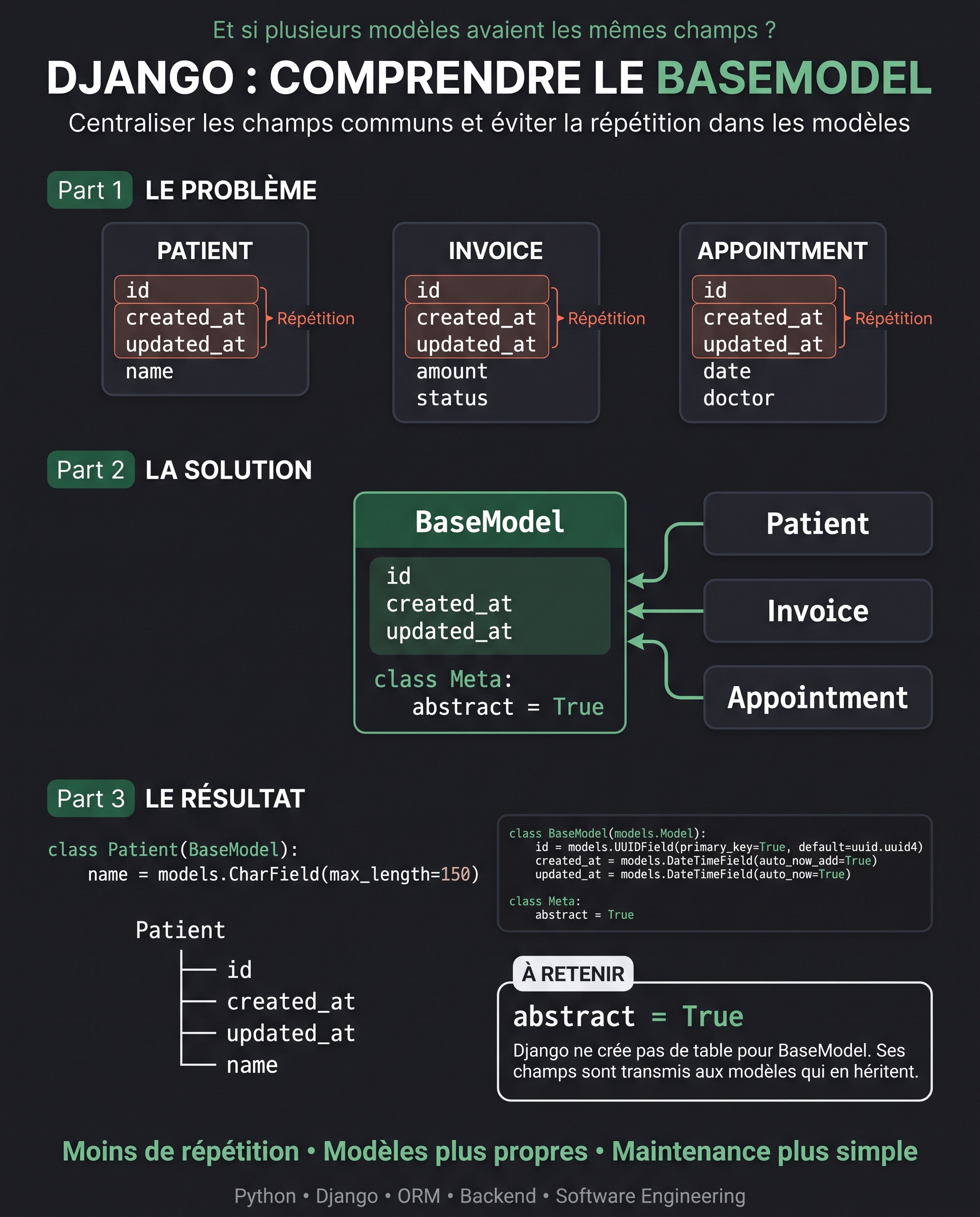
Django : construire un BaseModel réellement utile Dans une application Django, plusieurs modèles peuvent partager les mêmes informations : • un identifiant unique • une date de création • une date de modification • l’utilisateur ayant créé l’objet • l’utilisateur ayant effectué la dernière modification Au lieu de déclarer ces champs dans chaque modèle, on peut créer un modèle abstrait BaseModel. Par exemple : class BaseModel(models.Model): id = models.UUIDField( primary_key=True, default=uuid.uuid4, editable=False, ) created_at = models.DateTimeField( auto_now_add=True, db_index=True, ) updated_at = models.DateTimeField( auto_now=True, db_index=True, ) class Meta: abstract = True Puis un modèle métier peut simplement hériter de BaseModel : class Patient(BaseModel): name = models.CharField(max_length=150) Grâce à : class Meta: abstract = True Django ne crée pas de table dédiée à BaseModel. Les champs du modèle abstrait sont ajoutés aux modèles qui en héritent. Pourquoi utiliser un BaseModel ? → Éviter la répétition de code → Centraliser les champs communs → Garder les modèles métier plus lisibles → Standardiser certaines informations dans l’application → Simplifier la maintenance du code On peut également y ajouter des informations de traçabilité comme created_by et updated_by lorsque le besoin existe. ⚠️ Attention : un BaseModel doit rester simple. Il ne faut pas y placer des champs uniquement parce qu’ils pourraient être utiles un jour. Les éléments doivent réellement être communs aux modèles qui en héritent. 💡 À retenir : BaseModel n’est pas obligatoire dans Django. C’est un outil d’organisation du code particulièrement intéressant lorsque plusieurs modèles partagent les mêmes propriétés. Vous utilisez un BaseModel dans vos applications Django ?
Django
TCHONGWANG FONDJEU
Published on • 05 September 2026
Discover our practical and personalized training courses designed to meet your needs, available both online and in Bafoussam.
Subscribe to receive exclusive tips, guides, and resources
Join other people who are transforming their lives through learning and our innovative technological solutions
One thing I really love about HooYia is their method of working , it's one which pushes and forced you to work and at the same time improve yourself in more than 1 way. And one thing that I picked up from them and carry till this day is a little s…

HooYia Client
Working at Hooyia as a DevOps Engineer has been an incredible experience. I truly appreciate their commitment to excellence and the way the team collaborates to deliver high-quality, innovative solutions. The company's culture encourages creativity,…

HooYia Client